Gomen, ne! (Japanese for “Sorry”)

March 24th, 2006

Doing a podcast with two people is really hard, especially when you live far from the other person. Besides, it’s cherry blossom season in Japan, and we’re too busy drinking beer under the trees.

Anyway, well start doing more shows from April, once school starts back up and we’re both back at the office. In the meantime, go find a cherry tree to sit under and pour yourself a cold one.

Lesson 30: The Bob Show.

March 16th, 2006

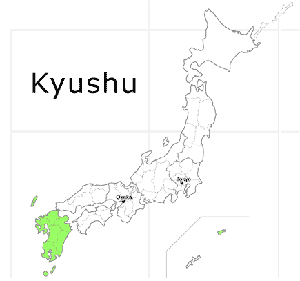
Yes, a preposterous notion: Bob minus Rob. However, because Bob is currently down in Kyushu in southern Japan and Rob is still up in Tokyo, we have no way to do a show. We tried Skype - the software that allows you to use your computer as a phone - but Rob’s internet connection is too slow (thanks, Rob!). Anyway, we’ll be back next week in full force.

Song:We Can’t Make It Here.
Artist: James McMurtry

Lyrics

Vietnam Vet with a cardboard sign
Sitting there by the left turn line
Flag on the wheelchair flapping in the breeze
One leg missing, both hands free
No one’s paying much mind to him
The V.A. budget’s stretched so thin
And there’s more comin’ home from the Mideast war
We can’t make it here anymore

“Vet” refers to someone who fought in the Vietnam War. “V.A.” stands for the “Veterans Administration”. He is begging for money on the side of the road. “Can’t make it’” has two meanings. The first means literally you can’t make something; example: if you don’t have an oven, you can’t make bread. The other idiomatic meaning means “can’t survive or live”

That big ol’ building was the textile mill
It fed our kids and it paid our bills
But they turned us out and they closed the doors
We can’t make it here anymore

“ol’” means “old”. “turn out.” means to “fire” or “lay off”.

See all those pallets piled up on the loading dock
They’re just gonna set there till they rot
‘Cause there’s nothing to ship, nothing to pack
Just busted concrete and rusted tracks
Empty storefronts around the square
There’s a needle in the gutter and glass everywhere
You don’t come down here ‘less you’re looking to score
We can’t make it here anymore

“till” is an abbreviation of “until”. The rusted tracks are train tracks. The needle is a drug needle. “Lookin to score” means “trying to get some drugs”

The bar’s still open but man it’s slow
The tip jar’s light and the register’s low
The bartender don’t have much to say
The regular crowd gets thinner each day

A light tip jar means that there is little money in tips. The register means cash register. If a crowd gets “thin”, it means it has fewer people than before

Some have maxed out all their credit cards
Some are working two jobs and living in cars
Minimum wage won’t pay for a roof, won’t pay for a drink
If you gotta have proof just try it yourself Mr. CEO
See how far 5.15 an hour will go
Take a part time job at one of your stores
Bet you can’t make it here anymore

The federal minimum wage in America is only $5.15 per hour. Working at this wage for 40 hours a week makes it very hard to survive, especially if you have kids. Some states, like California, have higher minimum wage laws. “how far 5.15 an hour will go” means “how long it will last, or how much it will buy”

High school girl with a bourgeois dream
Just like the pictures in the magazine
She found on the floor of the laundromat
A woman with kids can forget all that
If she comes up pregnant what’ll she do
Forget the career, forget about school
Can she live on faith? live on hope?
High on Jesus or hooked on dope
When it’s way too late to just say no
You can’t make it here anymore

“High” means to feel very good; usually, “high on drugs”. “Hooked on dope” is slang for “addicted to drugs”. “Too late to just say no” refers to former First Lady Nancy Reagan’s anti-drug campaign in the 1980s, in which she told kids to “just say no” to drugs. It was derided by many people as being an overly simplistic solution.

Now I’m stocking shirts in the Wal-Mart store
Just like the ones we made before
‘Cept this one came from Singapore
I guess we can’t make it here anymore

Wal-Mart is a large chain of department stores in America, and now in several other countries. They are able to offer very cheap prices because they pay their workers very little and do not provide most of them with health insurance. Most of their goods are manufactured in China rather than America, and this makes their prices very cheap. However, this leads to job loses in the U.S.. This system is great for consumers, but not very good for U.S. workers in manufacturing.

Should I hate a people for the shade of their skin
Or the shape of their eyes or the shape I’m in
Should I hate ‘em for having our jobs today
No I hate the men sent the jobs away
I can see them all now, they haunt my dreams
All lily white and squeaky clean
They’ve never known want, they’ll never know need
Their sh@# don’t stink and their kids won’t bleed
Their kids won’t bleed in the da$% little war
And we can’t make it here anymore

The men who sent the jobs away: The CEO’s, Company Presidents, etc. “Their kids won’t bleed” means the CEO’s kids won’t have to fight in the Iraq war. (The U.S. military is currently an all-voluntary force,. Compared with the regular civilian population, it has a higher percentage of people from low-income backgrounds, many who have joined in the hope of improving their lives or getting college aid.)

Will work for food
Will die for oil
Will kill for power and to us the spoils
The billionaires get to pay less tax
The working poor get to fall through the cracks
Let ‘em eat jellybeans let ‘em eat cake
Let ‘em eat sh$%, whatever it takes
They can join the Air Force, or join the Corps
If they can’t make it here anymore

Jelly beans were former President Reagan’s favorite candy. “Corps” is short for the U.S. Marine Corps.

And that’s how it is
That’s what we got
If the president wants to admit it or not
You can read it in the paper
Read it on the wall
Hear it on the wind
If you’re listening at all
Get out of that limo
Look us in the eye
Call us on the cell phone
Tell us all why

In Dayton, Ohio
Or Portland, Maine
Or a cotton gin out on the great high plains
That’s done closed down along with the school
And the hospital and the swimming pool
Dust devils dance in the noonday heat
There’s rats in the alley
And trash in the street
Gang graffiti on a boxcar door
We can’t make it here anymore

____________________________________________________
Joke
Bubba Bohacks

____________________________________________________

Both sides of the pond
(US) toilet (UK) toilet / Lavatory / Loo (slang) / bog (slang).
(US) butt (UK) bum
(US) toilet paper (UK) toilet paper / loo paper
____________________________________________________


Lesson 29: More Strategies

March 10th, 2006


Preview: This week we came back after a short break because Bob and Rob are ridiculously busy with several other projects all on the go simultaneously. We talked a bit more about conversation strategies, and how to show interest to a speaker, as well as some comments about movies and in particular the new release “Memoirs of a Geisha”. Also, we had a wonderful monologue from the comedian Bubba, who talked about the craziness and paradoxes of the English language.

idioms
“to hit the nail on the head”= this means to say something just right, or sum something up perfectly.

Speaking strategies
Showing interest:
“Oh really?”, “Oh yeah?”, “How about you? / And you?”, “You’re joking / you’re kidding”, “No way”,
“Wow”, “Cool”, “That sounds…great! / fun! / interesting! / cool! /”,
“That sounds…boring / troublesome / terrible” etc.

____________________________________________________

Both sides of the pond
(US) cig(s) (UK) fag(s) / ciggies (slang)
(US) tobacco (UK) snouts (slang)
(US) fag (slang and quite offensive) (UK) homosexual
____________________________________________________

Busy as bees. Back next week. Promise.

March 2nd, 2006

It’s been a “perfect storm” of project deadlines. Rob and I are trying to get our textbook finished, as well as various other projects. Sorry for the delay.

Lesson 28: The Bob and Rob and George Show

February 17th, 2006


Preview: On this show we had a special guest. Actually, it was a satirical interview with President Bush of the USA.

Vocabulary
discriminatory- treating people differently in an unfair way.
derogatory- insulting and disapproving.
pejorative- expressing disapproval or criticism.
partisan- someone who supports a particular party, a plan or a leader and disliking all others.

Speaking strategies
hesitation tips:
It’s ok to hesitate when conversing. In fact, it is a very natural thing to do. Native speakers of English hesitate during discourse all the time, so the following utterances will go a long way in making you sound more natural in your speech. Good luck.

“err”, “erm”, “uhh…let me see”, “well, er…let me think a sec”, “hmm…”

Song:
Artist: USAF Heritage Band
Song: Yankee Doodle

More info about Yankee Doodle

____________________________________________________

Both sides of the pond
(US) yankee / limey (UK)
____________________________________________________

Technorati Tags: , , ,

Lesson 27: Shall we dance?

February 10th, 2006


Preview: On this show we talked about metaphors and lyrics from a Bryan Adam’s song and tried to explain about some of the differences between “shall” and “will”, and “would” and “should”

Metaphors
A metaphor is a way of describing something by saying it has the qualities of something else. It compares things without using the words “as” or “like” (which are similes).

Example: “Life is an open road to me”. This line comes from the Bryan Adam’s song “Open Road”, and it means that you feel free and have no restraints. No “traffic” holds you up because the road is clear.

Grammar Question
What are some of the subtle differences between “shall” and “will”, and “would” and “should”?
1) It is important to remember that “Will” can be used instead of “shall” in most cases.
2) “Shall” and not “will” is used in suggestions, offers, requests for instructions, and requests for advice:

Example:
Shall I carry your luggage?
Shall we eat out?
What shall I do?

3) In reported speech, information-questions are reported with “will” or “would” in the 3rd person and offers and requests for instructions are usually reported with “should” in either present or past sentences.

Example:
She wants to know if she will get to the station on time.
She asked if she would be in Tokyo next week.
She asked if she should carry my luggage

Speaking strategies
Reacting to good news:
“Congratulations”, “that’s great/wonderful/fantastic!” etc, “I’m happy to hear that”, “cool”.
Reacting to bad news:
“Oh no, that’s terrible”, “that’s too bad”, “I’m sorry to hear that”, “bummer”.

Song:
Artist: Justin Peterson
Song: And it shall be

____________________________________________________

Both sides of the pond
(US) cold / chilly (UK) parky / chilly / cold
(US) bitter (served cold)/ (UK) bitter (served at room temperature)
____________________________________________________

Corrections: Pat Benatar sang “Love is a battlefield”, not Joan Jet.
Bob mispronounced “ethos”

Lesson 26: Idioms.

February 4th, 2006

Preview: On this show we talked about some expressions and idioms and tried to answer a question about word order from Dimitri.

Vocabulary and Expressions
Don’t count your chickens until/before they hatch= This means to be cautious about what to expect. Do not be too confident or take something for granted.

Stay cool but don’t freeze= This is a play on words. Cool means to be hip or fashionable as well as physically cold. If water gets cool enough, it freezes into ice. It’s a kind of joke but not used that often.

Freeze= As a slang term, this is an order to stop, or to stay still. Bob told a true tragic story about this in America.

Grammar Question
How can I decide which of the following sentences to use?
1) Who did you see yesterday?
2) Who saw you yesterday?
In sentence 1, “who” is the direct object and “you” is the subject. This gives a pattern of OVSV. (note: first V is auxilliary)
In sentence 2, “who” is the subject and “you” is the direct object. This gives a pattern of SVO.
I think sentence 1 sounds more natural, but don’t be afraid if the forms get mixed up. Just remember that the subject is usually always followed by a verb.

Joke
Bubba Bohacks

Song:
Group: Chris Payn
Song: Coffee

____________________________________________________

Both sides of the pond
(US) jello/ (UK) jelly
(US) jelly/ (UK) jam
(US) period/ (UK) full stop

Welcome Eslpod.com listeners!

January 31st, 2006

I’ve noticed recently we have a number of new listeners via Dr. Jeff McQuillan’s Eslpod.com. A hearty welcome to you all!

Dr. Jeff McQuillan does a wonderful job, particularly for intermediate-level learners. In fact, I wish there were something similar for studying Japanese.

On the Bob and Rob Show we speak at native-level speed, so you might find some of our bantering a little difficult. I like to tell cheesy jokes and tease Rob. Luckily, Rob is a patient man; he’s only had to punch me out once.

However, we often focus on topics that are relevant to lower-level learners, and we also try to include fun stuff, like songs and jokes. Please let us know if you have any suggestions for future shows. And email us any questions you have about learning English, and we’ll try to bring them up sometime. Or we’ll just ignore them. And anything that goes wrong with our show is Rob’s fault. Always.

Again, good to have you as listeners.

Double New Year Show with skim milk and an extra shot of espresso

January 29th, 2006

Howdy, all. You may have noticed that the Starbucks lesson was actually a duplicate of the New Year Show. As usual, it’s all Rob’s fault and I will scold him harshly for making such a silly mistake.

Lesson 25: Starbucks

January 29th, 2006

Preview: On this show we talked about coffee, the coffee shop ‘Starbucks’ and its history. We also interviewed Hiromi, who is one of our listeners, at a local starbucks in Japan.

Vocabulary and Expressions
Control freaks= people who want to control and/or dominate a situation.

Don’t go there= do not talk about that topic or subject. (Of course in other contexts it means an order of not to go to a physical place; example: “Listen to me young boy, the city is a dangerous place so don’t go there”).

diaretic= A drink that makes you thirstier (or dehydrated).

Bubba= this is literally ‘brother’, and is also a name for some people. It’s like a nickname.

Joke
Bubba Bohacks

Small world= this expression means what it says, that it is indeed a small world, and we use it when we hear a story about meeting people we may know or have a connection with, in different countries, or find someone who has something in common with us in a far away place.

Song:
Group: The Jellybricks
Song: Can’t stop crying
Can’t stop crying

____________________________________________________

Both sides of the pond
(US) can’t/ (UK) can’t

This is a pronunciation difference. The standard British English of “can’t” is easier to distinguish from the word “can”, but in American English, “can” and “can’t” sound very much the same.